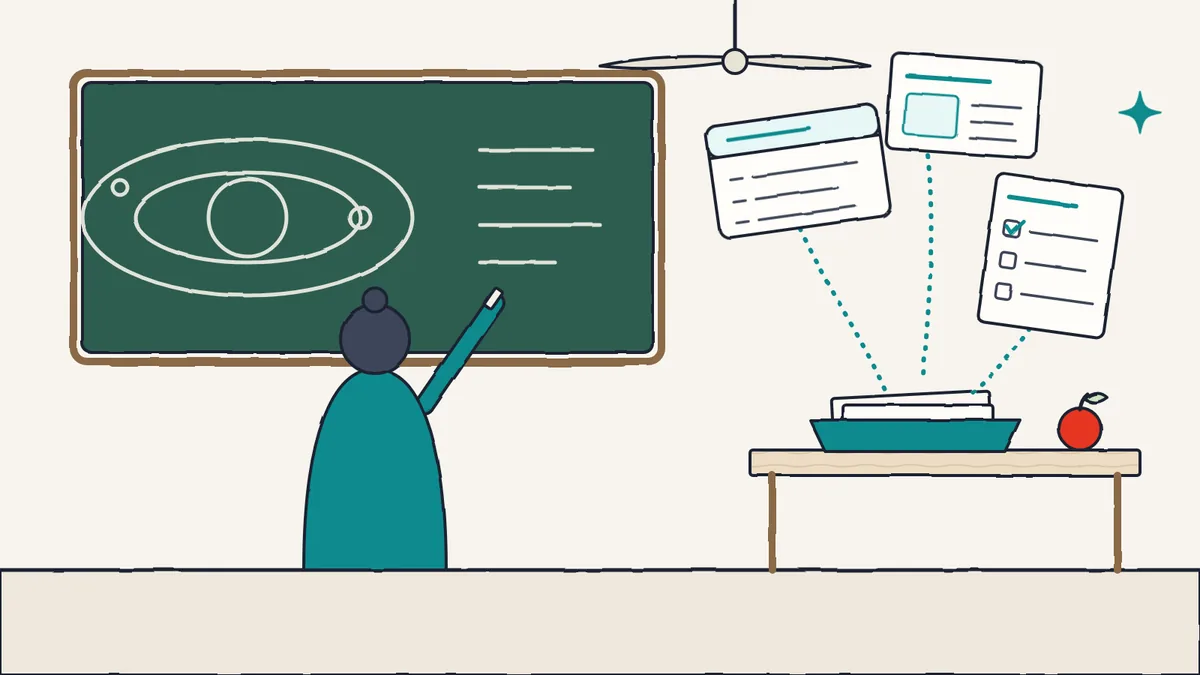
AI in schools is often described as a "revolution". The plainer, more accurate description is that AI helps the person already doing the work. The teacher stays in charge. AI simply lets them get more done before the bell rings.
Here is what that looks like across a real teacher's week.
A lesson plan for the week's chapter, a warm-up quiz, and a worksheet at three levels. The same prep hour, with three things actually finished.
Textbook Chat on the smart board answers from the class's own textbook. The teacher stays in charge and has help on hand.
Papers are scanned and sent for marking in the afternoon. The teacher's evening is free, and the marked papers wait for review when marking is done.
A short worksheet on the weak areas only. Twenty minutes of class on exactly what was missed.
Each student's report has written feedback on each question. Today it goes home printed; sharing on the parent app is coming soon.
No backlog of unprepared lessons. No stack of papers waiting. Sunday evening feels different.
Monday: the week starts
Before AI, Monday had a quiet hour set aside for preparing the week. Most of it went on reusing old slides, copying questions from an old worksheet and searching online for one extra reading.
Now the TeachSmartAI Classroom App opens on the teacher's timetable for today, so the week's chapters are already in front of them. With AI that works from the school's own textbooks, the same hour produces:
- A lesson plan for the week's chapter, with a teaching order the teacher can adjust.
- A warm-up quiz of five quick questions recapping last week.
- A worksheet at three levels: for students who need more challenge, for those at the expected level, and for those who need more support.
The same hour, with three things finished rather than three things half-done and left for lunch.
- Lesson planA teaching order to adjust
- Slide deckFull screen in class
- WorksheetAt the level you choose
- QuizQuick recap questions
Tuesday: class is in session
In the classroom, AI does not replace the teacher. It sits beside them. Textbook Chat is open on the smart board. When a student asks something the teacher can't immediately place, the chat answers from the chapter on screen. The teacher confirms it and the lesson moves on. For the slides, Present mode fills the screen, and the Classroom and Hall text sizes keep every line readable from the back row, in English, Telugu or Hindi.
The best AI in a classroom is the one nobody notices. It just makes the teacher a little better prepared and a little more available.
When a student finishes early, the teacher hands over the harder version of the morning's worksheet, made from the same chapter.
Wednesday: test day
A short class test of twenty minutes. In the past, the teacher would take the bundle of papers home that evening to mark.
With SkoraAI, the papers are scanned and sent for marking in the afternoon. The teacher's evening is free. The teacher reviews the marked papers once marking is done, and students get their feedback as soon as the teacher approves it.
Thursday: review and reteach
This day barely existed before. Once Wednesday's papers are marked and reviewed, the teacher has:
- A clear view of which topics the class found hard.
- A short reteach worksheet, made in TeachSmartAI in a few minutes, on just the parts the class got wrong rather than the whole chapter.
The teacher doesn't reteach the whole chapter, only the part the results pointed to. Twenty minutes of class on exactly what was missed.
Friday: closing the loop
At the end of the week, the teacher shares the test results with parents. Each answer already has written feedback, but the teacher decides what is sent and edits anything that needs their own words. Today the report goes home printed; sending it through the parent app is coming soon.
Sunday evening: what teachers notice
After a few months, teachers mention it quietly: Sunday evening doesn't carry the same dread. The week ahead isn't a pile of unprepared lessons, and there is no stack of marking waiting.
None of this is glamorous. There is no AI tutor and no automated learning path. There is a teacher who finishes prep in an hour instead of an evening, gets marked papers back quickly, reteaches exactly what was missed, and sends parents results that are already explained.
A better way to think about it
AI doesn't replace the teacher. It sharpens the tools the teacher already uses. Lesson plans are quicker, worksheets fit the class better, marking is lighter, and messages to parents say more. The teacher does the same job, with a little more time each day to do it well.
What's new (October 2026)
- Printouts match the screen. What the teacher prints looks like what the class saw, and flashcards print with their answers.
- Fixing a picture keeps your change. When a teacher asks for a change to one picture, that change is kept in the new picture instead of being replaced.
Send us a term-end paper. We will mark it free.
No commitment. We mark it with SkoraAI and email you the marked sheet, with the reason for every mark, the weak areas, and our price for a pilot. Your teacher checks every mark alongside ours.