A new "AI for teachers" tool seems to launch every other week. Most are a general chat box with a promise to save teachers time. After a week in a real classroom, most stop being used. We have seen it happen often enough to know why.
TeachSmartAI starts from a different idea: the AI has to know what your school is actually teaching, from which book and which chapter, this week. Everything else follows from that.
Tries to help with everything
- Learns from the internet in general
- Doesn't know your board, edition or chapter order
- Teacher rewrites most of what it produces
- Stops being opened by week three
Starts from your textbooks
- Works from the school's own books and notes
- Knows the chapter, its pages and its diagrams
- Teacher checks and adjusts, rather than rewriting
- Becomes part of the weekly routine
The problem with general chatbots
A teacher asks a general AI tool for "five quiz questions on photosynthesis for Class 7". It gives five reasonable questions. But they are slightly off. The wording uses terms the school's textbook doesn't introduce until Class 8. One question refers to a diagram the book never showed. Two are at the wrong level.
The teacher edits all five. By the third question, writing them from scratch would have been quicker. By the next week, she has stopped using the tool.
The tool is not the problem. The missing piece is context. It is being asked to write a quiz for a specific syllabus without knowing the syllabus, so it falls back on what is common on the internet. That is not your school's textbook.
What changes when it starts from your textbooks
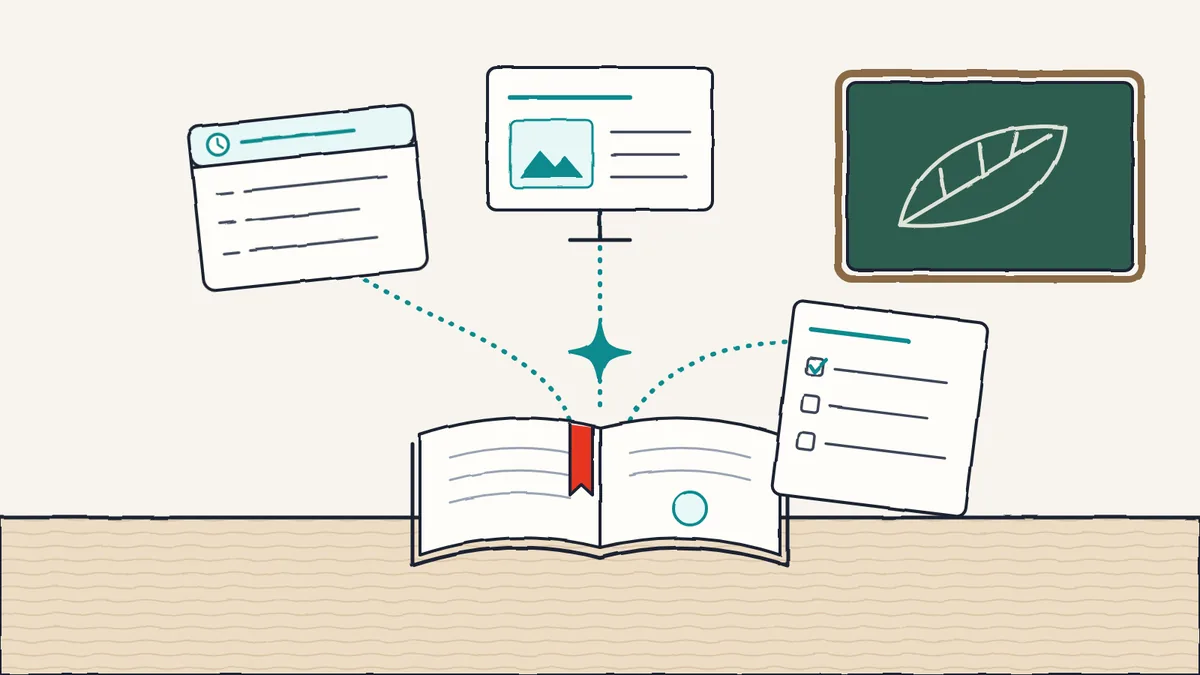
TeachSmartAI works from the school's actual books: every chapter, diagram caption and worked example. When a teacher asks for a worksheet on photosynthesis, it first finds the right pages of the Class 7 science book the school uses, then writes the worksheet from those pages.
The AI still writes the questions. But the source is the book on the student's desk, not something from the internet.
- Teacher types a requestNo book, no chapter
- Answer from the internetThe most common version of the topic
- Teacher rewrites itWrong level, wrong words
- Teacher picks the chapterFrom the school's own book
- Finds the right pagesText, diagrams and examples
- Draft from those pagesMatches the book's level and words
- Teacher checks and adjustsNo rewriting from scratch
One choice, starting from the school's own books, is what turns "an AI tool" into something teachers actually use.
What teachers can now do
Once the material comes from the school's own books, a few things become practical:
- Lesson plans that match the actual bookVocabulary and diagrams from the right chapter of the right edition. A substitute teacher can use the plan without going off-syllabus.
- Worksheets at three levelsEasy, medium and hard versions of the same topic, all from the same chapter. Teaching to different levels in one class finally becomes practical.
- Slide decks teachers don't have to rebuildDecks use diagrams from the actual textbook and notes that follow the school's teaching order, so there is no swapping of pictures afterwards.
- A Textbook Chat the teacher can use with the classIf a student asks about Chapter 4, the answer comes from Chapter 4 of your book. When the book doesn't cover it, the chat says so.
Two problems a general tool can't fix
Two problems lose teachers' trust faster than anything else. Starting from the school's books removes both:
- Made-up references. A general chatbot will happily say "see page 142" for a book it has never seen. A student copies it down. The teacher finds the page doesn't exist, and trust is gone. A tool that works from your book answers only from what is in it, and says so when the book does not cover the question.
- Off-syllabus content. A general tool uses the most common version of a topic on the internet. That might be the IB version when you teach CBSE, or an American convention when you teach the Indian one. A tool that works from your book only uses what is in the book.
Why it earns a place on the desk
Teachers will use any tool that saves more time than it takes. Most general AI tools fail that test in the second week, because fixing the output takes as long as writing it.
When the material already matches the syllabus, the edition and the level, the teacher's job becomes check and adjust, not rewrite. That is the difference between a tool that lasts and one that doesn't.
Finding the material quickly matters too. The TeachSmartAI Classroom App opens on the teacher's timetable for today, so the lesson for each period is close at hand.
What's new (October 2026)
- All 17 kinds of material are live, including flashcards, mind maps, Visual Summary posters, flow charts, slide decks, worksheets and quizzes, all from the same chapter.
- Telugu and Hindi look right. Material in Telugu and Hindi uses proper fonts for each script, on screen and on paper.
Send us a term-end paper. We will mark it free.
No commitment. We mark it with SkoraAI and email you the marked sheet, with the reason for every mark, the weak areas, and our price for a pilot. Your teacher checks every mark alongside ours.