A confident wrong answer is the worst kind
General chatbots are built to always give an answer. In a search box that is fine. In a classroom it is a risk. Ask one about the water cycle and you get a fluent, believable paragraph that may not match your board, the edition on the student's desk, or the chapter the teacher actually taught.
Worse, it may invent a reference: "see page 142." There is no page 142. The student copies it down. The teacher spots it. Trust does not come back after the first made-up reference.
The natural response is to look for a "smarter" AI. That does not solve it. A general chatbot only knows what it picked up from the internet. It has never seen your school's textbook.
What "works from your textbooks" really means
The phrase gets used loosely, so it is worth being clear.
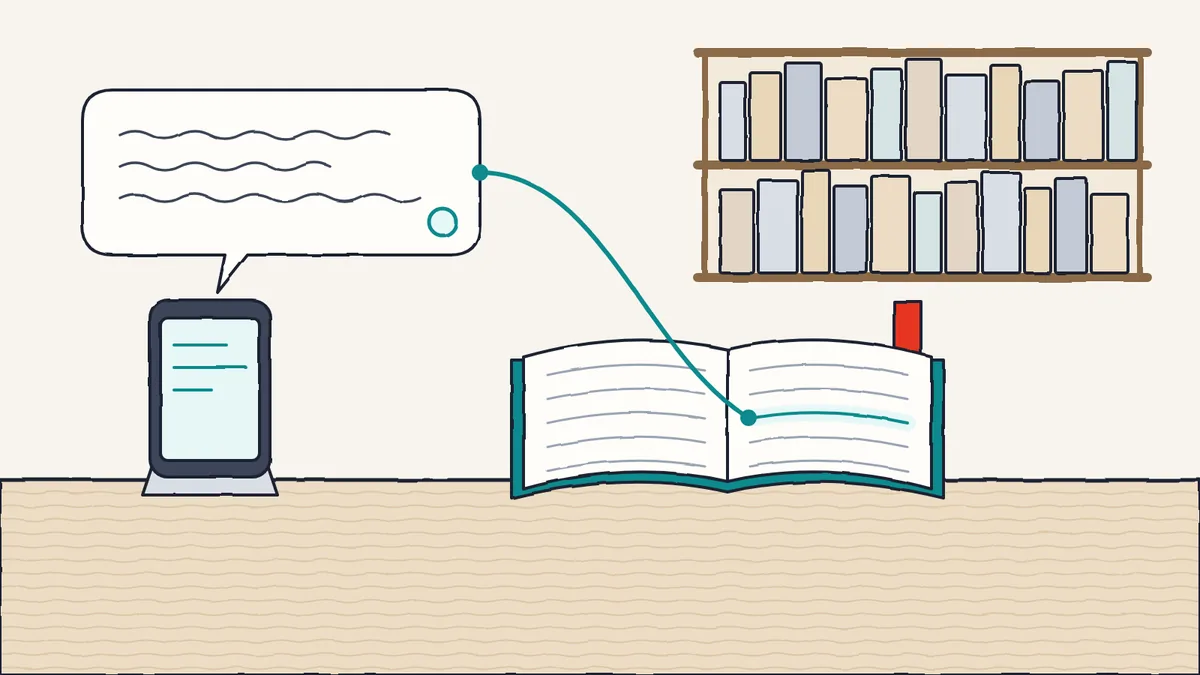
TeachSmartAI does not retrain an AI on your books. It keeps your textbooks, workbooks and notes in a library for your school. When a question comes in, it first finds the few passages in your books that match it, then answers only from those passages.
The AI still writes the sentence. But the facts come from the book on the desk, not from the internet.
Answers from what it already knows
- Draws on a general mix of the internet
- Wrong board, wrong edition, sometimes the wrong idea
- Invents page references that don't exist
- Always answers, even when it shouldn't
Answers only from your books
- Finds real passages in your textbook
- Matches your board, edition and chapter
- Stays within the chapters you choose
- Says so when the topic isn't in your material
Answering only from the book matters most
If an answer doesn't come from the book on the student's desk, it is a guess with good grammar.
TeachSmartAI builds every answer only from passages in your books. That matters for three reasons:
- A teacher can check it against the book. The answer comes from the chapter the class is studying, so the teacher can compare it with what they taught.
- It teaches students where to look. An answer tied to the book points students back to the book, so they learn the material, not just the answer.
- It matches your syllabus automatically. Because the answer comes from the school's own books, it matches the right board, edition and syllabus. No guessing which curriculum you follow.
Why a good textbook chat sometimes says "I don't know"
This part surprises people: a well-built textbook chat should sometimes decline to answer.
If the question is not covered anywhere in your material, the honest reply is "this isn't in the material I've been given", not a confident paragraph from general knowledge. A guess that looks like a sourced answer is exactly the problem we set out to remove.
- A question comes inFrom a teacher or a student
- Looks only in your booksThe chapters you chose, not the internet
- One of two replies
Found in your bookThe answer is written only from those passagesNot in your bookIt says so, instead of guessing
Saying "I don't know" is useful. It tells the teacher the topic is not in the uploaded books: either it is outside the syllabus, or more material needs to be added. Both are worth knowing. A chatbot that never says "I don't know" can't be trusted when it does answer.
What it changes for teachers and students
For teachers: a Textbook Chat that works from the school's own books is something you can use with a whole class. The worst case is not a wrong answer spreading round the room. It is an answer you can check against the book, or an honest "not in the material".
For students: an answer that comes from their own book turns a chatbot into a study guide. Going back to the chapter in the book is the real studying.
Send us a term-end paper. We will mark it free.
No commitment. We mark it with SkoraAI and email you the marked sheet, with the reason for every mark, the weak areas, and our price for a pilot. Your teacher checks every mark alongside ours.