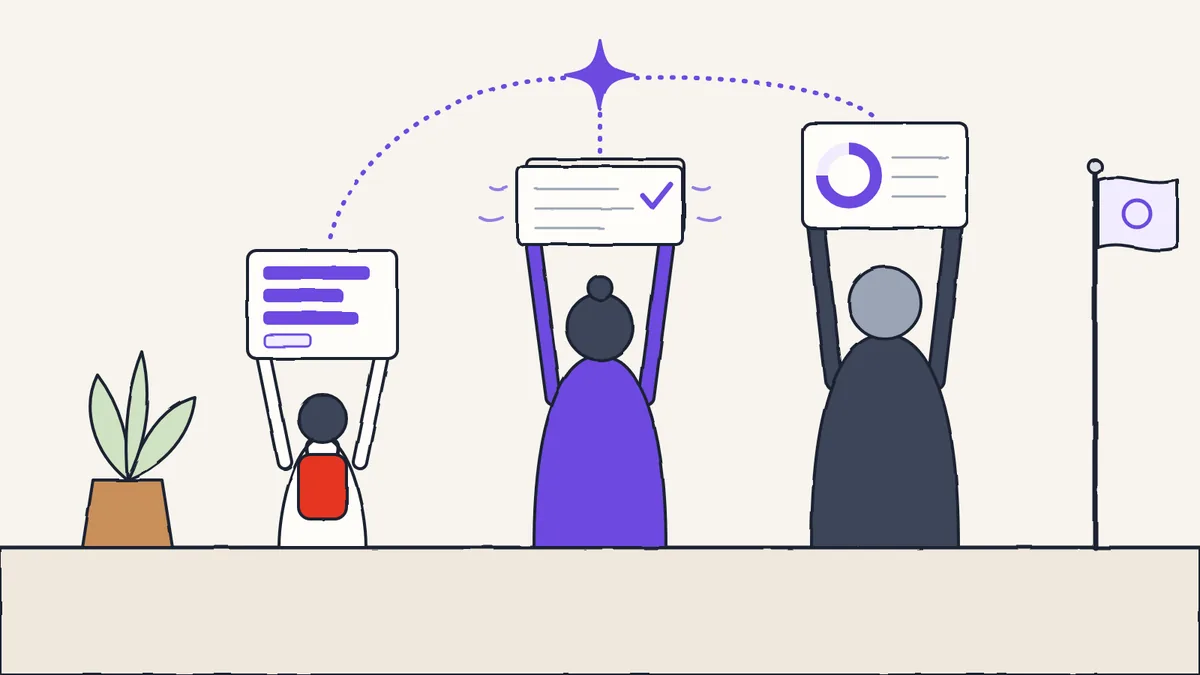
Most "AI in schools" pitches are written for one audience and hope the others don't ask too many questions. SkoraAI can't work that way. It has to work for three different groups (students, teachers and the school itself) or it works for no one.
This post looks plainly at what AI grading changes for each of the three. It is what we see when schools use it, not a wish list.
For students — same fairness, faster
From a student's point of view, the headline change is timing. A history paper written on a Thursday used to come back two or three weeks later, with a number on the cover. By then the lesson has moved on, the memory of the answer has faded, and the mark has become abstract.
With AI grading, the same paper comes back as soon as the teacher approves the marks, with three things the old way could not offer:
- Feedback on every question, in plain words. Not a comment scribbled in red, but a short explanation of which points the answer covered and which it missed.
- A clean view of weak areas. "You drop marks in Chapter 4, not in Chapter 2" is a more useful thing for a 13-year-old to know than "you got 14/20".
- Confidence that the marking is consistent. The same answer key is applied to their paper as to every other student in the class, and to the section next door taught by a different teacher.
The single biggest cause of "this isn't fair" in classrooms isn't AI grading. It's two human teachers marking the same paper to different bars on different days.
For teachers — the routine half done for you, the important half kept
Teachers' time is the scarcest resource in any school. Term-end is the hardest stretch of the year for them: long evenings for two weeks straight, marking the same question 40 times in a row.
AI grading does the parts of marking that don't need a teacher's judgement. What is left is the part that does:
- Reviewing SkoraAI's marks. Every paper arrives showing the points covered, the points missed, and where each answer is on the sheet. Reviewing a paper takes far less time than marking it.
- Changing the marks that need a teacher's eye. Context, how to give part marks, "this student went beyond the key but the answer is actually good": here the teacher stays in charge.
- Writing the comments that matter. Instead of writing "good" 40 times, the teacher writes substantive feedback to the eight students who actually need it.
In practice, most teacher changes are small adjustments rather than full rejections. That is the working agreement: SkoraAI does the bulk, the teacher makes the judgement calls. And if the key itself was wrong for one question, the teacher corrects it once and only that question is re-marked on every sheet. Nothing else moves.
For schools — operations move from weeks to days
For the school, the change is big. The principal's office moves from "results come out in three weeks" to "results are ready as soon as teachers approve them". That leads to benefits that are not talked about enough:
- Parent communication starts earlier. Weak areas are ready to share with parents as soon as the teacher approves the results (sharing them on the parent app is coming soon). Conversations about extra help happen soon after the test, not after the next unit has started.
- Teaching adjusts straight away. If 60% of Class 9 struggled with the same kind of question, the teacher knows once the marks are approved, not weeks later — and can re-teach the topic while it's still relevant.
- Records are always ready. Every mark is kept with the reasons behind it, any teacher change, and the date and time. A board affiliation visit that used to mean weeks of file pulling becomes a quick search.
- Senior staff get their time back. Senior teachers and HODs stop spending term-end marking. They spend it on work only they can do: setting standards, mentoring junior teachers, planning the curriculum.
The thing that makes it work for all three
AI grading only works for all three groups when every step can be checked. Students need to see why they got the marks they got. Teachers need to see what SkoraAI saw before they sign off. Principals need a record that holds up in a dispute.
- Feedback on every question
- Points covered and missed
- The same key as every other section
- Review instead of re-marking
- Check flagged answers first
- Change any mark, and the change is kept
- Results once teachers approve them
- Weak areas by class and chapter
- Every mark kept with its reason
Take any of those away and it fails someone. A bare "AI scores 87" with no reasons fails the student. A mark the teacher cannot change fails the teacher. A mark with no history fails the principal in front of a parent.
It is not the AI that earns everyone's trust. It is the record behind every mark.
What's new (October 2026)
- Real school papers, three languages. SkoraAI marks papers in English, Telugu and Hindi, across Maths, the Sciences, Social Studies and the languages.
- Fewer review flags for teachers. Answers are flagged only where a teacher really needs to look. The teacher still reviews and approves every sheet.
- Reports for the school. Weak chapters, section-by-section comparisons, and a report on how closely SkoraAI's marks agree with teachers' marks.
Send us a term-end paper. We will mark it free.
No commitment. We mark it with SkoraAI and email you the marked sheet, with the reason for every mark, the weak areas, and our price for a pilot. Your teacher checks every mark alongside ours.