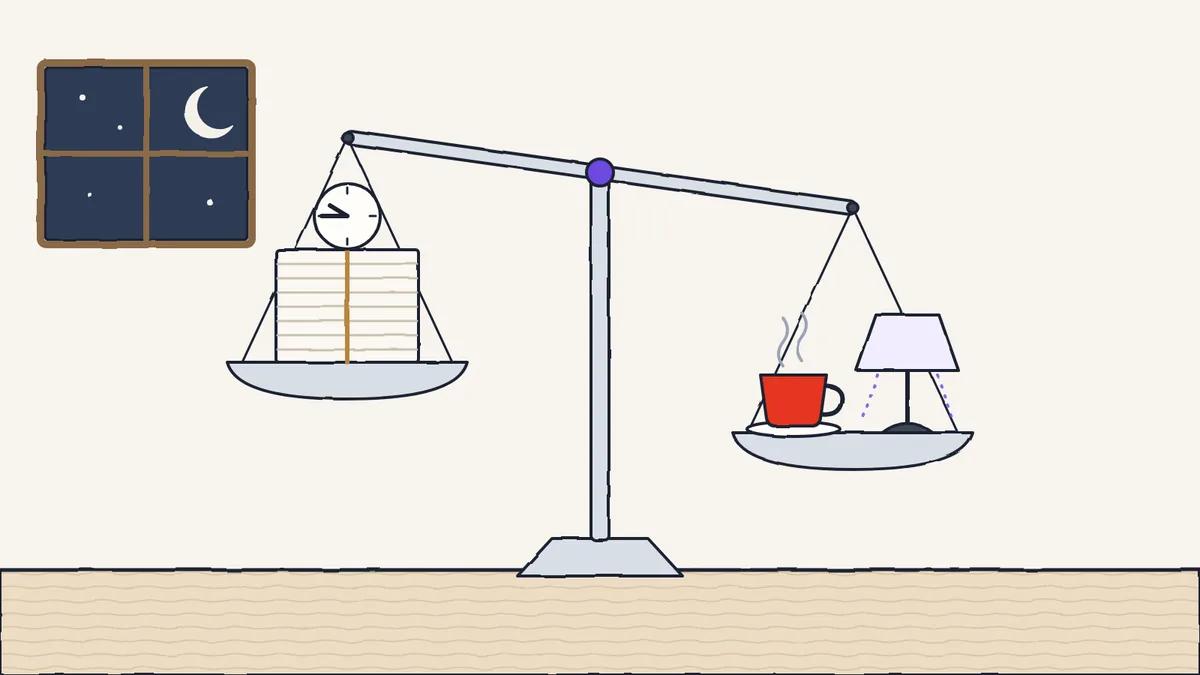
Every conversation about AI in schools eventually arrives at one cautious question: do we really need this? It's a fair question, and the answer should not be "because it's the future." The case for AI grading is older and plainer than that. It is about a problem in how schools have worked for fifty years.
What term-end actually costs a school
Walk into the staff room of any school on the second Monday after a term-end exam. The marking pile is on the desk. There are at least three teachers visibly behind. Someone has a headache. The principal is asking when results will be ready.
Take a typical mid-sized school — 800 students, six subjects per class, three terms a year. The arithmetic is grim:
- A subject teacher marks ~140 papers a term, around 12 minutes each.
- That's roughly 28 hours of marking, on top of the regular teaching load.
- Multiplied across the school's 35-odd teachers, you're looking at ~1,000 person-hours per term. Three terms a year. Every year.
Example. Illustrative figures for a sample school, worked out above.
That is the workload. The other cost is worse: the senior maths teacher spending evenings on routine marking instead of the things only she can do. It's the English HOD too exhausted to moderate fairness across sections. It's the principal sending results out two weeks late because someone fell ill.
- Carry the bundle home
- Mark the same question again and again
- Tired marking drifts from paper to paper
- Weak topics seen only after results
- Papers scanned and sent for marking
- Each answer marked from your key
- Teacher checks flagged answers first
- Teacher approves, then results go out
The fairness problem nobody puts on the parent newsletter
The hidden cost is consistency. The same answer, marked by two different teachers on two different evenings, often gets two different marks. Marked by the same teacher in the morning vs. at midnight, often gets two different marks. This is not a personal failing. It is a well-known effect, studied for decades. People mark less consistently when they are tired.
The most common cause of "this isn't fair" in a school isn't an AI making a mistake. It's two teachers marking the same paper to different bars on different days.
An AI marker working from your answer key applies the same standard at 9 AM and at midnight, to paper 1 and paper 140. It is not smarter than the teacher. It is just steadier. Mark the same sheet again and SkoraAI gives the same marks.
Why now and not five years ago
The honest reason this conversation is happening now and not in 2020 is that two things became possible at the same time:
- Reading handwriting finally works. Not perfectly, but well enough for most school papers. SkoraAI marks real school papers in English, Telugu and Hindi, across Maths, the Sciences, Social Studies and the languages. Answers that cannot be read are flagged for a teacher rather than guessed.
- AI can now follow an answer key. It can look at "expected points: a, b, c" and decide whether a student's two-paragraph answer covered them. Five years ago it could not.
The third thing is care in how the work is done. SkoraAI does not just hand the paper to an AI tool and hope. It sets up the paper, reads the handwriting, matches each answer to its question, and marks each written answer on its own. Multiple-choice and one-word answers never go to the AI at all: they are scored by fixed rules from the key. That is what makes the result something a teacher can sign off.
What "we need this" looks like in practice
If your school recognises any three of these signals, you're in the territory where AI grading earns its keep:
- Term-end results take > 5 working days to releaseThe grading load is the bottleneck, not the printing.
- Teachers do two consecutive weekends of markingThe "term-end push" has become structural, not occasional.
- Parents start asking before results are readyThe expectation has overtaken the throughput.
- Principal can't name the weak topics until after sign-offYou get a final number, but no picture of where students struggle.
- You run more than one section per classCross-section consistency is currently a hope, not a measurement.
- Board audit means weeks of file-pullingThe records are in cupboards, not a few clicks away.
The case isn't "replace teachers"
This is where the conversation usually goes wrong. AI grading does not replace teachers. A teacher approves every published mark, and changing a mark is quick and easy. The marks teachers do change are the cases where their judgement was essential.
What changes is what the teacher's time is spent on. Fewer hours marking routine multiple-choice and short factual answers. More hours on the work that requires a teacher — moderating standards, writing substantive feedback, mentoring the students who need it, planning the next unit.
Send us a term-end paper. We will mark it free.
No commitment. We mark it with SkoraAI and email you the marked sheet, with the reason for every mark, the weak areas, and our price for a pilot. Your teacher checks every mark alongside ours.